Subject: Story Analysis
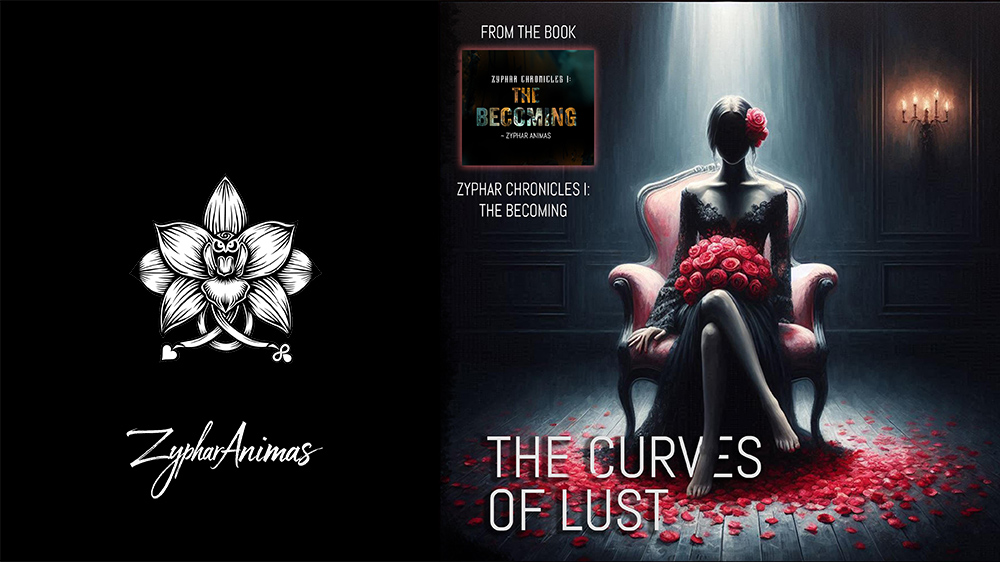
Story: The Curves of Lust
Author: Zyphar Animas
Series: Zyphar Chronicles
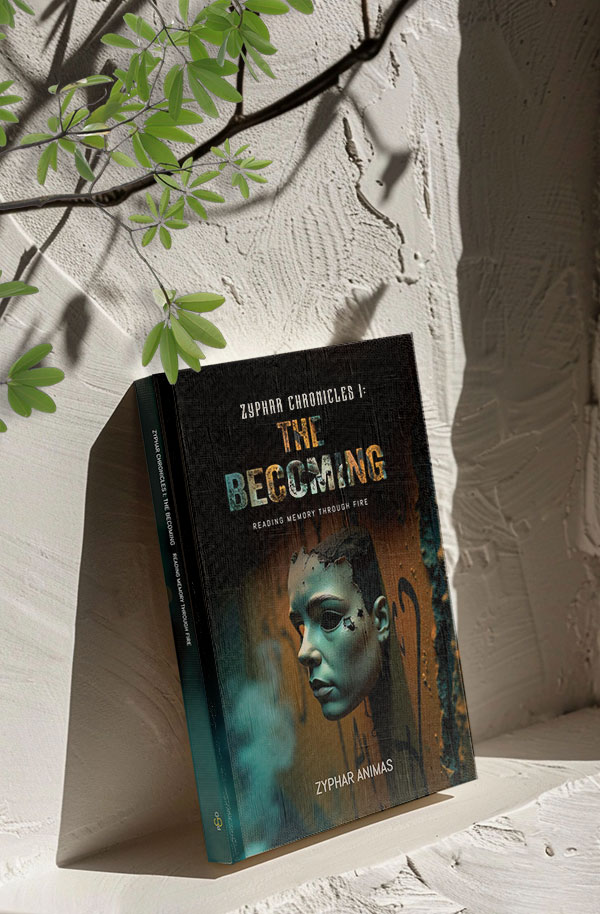
Book: Zyphar Chronicles I: The Becoming — Reading Memory Through Fire
ISBN: 9789843576989
Format: Print & Digital
Official Book Page: Zyphar Animas Official Website
Social Discussions: Author’s Facebook, Author’s Instagram
Reading Link: Free read on author’s official website
Inside the Flame : Topics Covered
When readers reach the chapter “The Curves of Lust” from Zyphar Chronicles I: The Becoming, something unusual happens.
When readers reach the chapter “The Curves of Lust” from Zyphar Chronicles I: The Becoming, something unusual often happens.
The chapter leaves a strong emotional impression, yet many readers find themselves asking questions about its deeper structure.
Why do the mirrors break?
What do the Curves truly represent?
Why does the arena react the way it does?
This investigation does not attempt to decode every symbol inside the chapter. Instead, it offers a guided look at several elements that help readers understand the narrative mechanics behind the story.
In this article we will explore:
- The stage of the story — understanding the City of Smoke and Mirrors and the arena environment where the chapter unfolds
- The role of the Curves — what they represent within the structure of the city
- The meaning of the abandoned boy — and how this image changes the logic of the arena
- Why the Protagonist Chooses to Lose?
- The Hidden Question Inside the Story.
- Related Literary Works — literature that use similar symbolic environments, when clear parallels exist
- What Appears Distinct in ‘The Curves of Lust’ by Zyphar Animas — the structural elements that give the story its unique weight
- Editorial Notes: Why This Chapter Was Written This Way? — from Nimo Verin, the the official editor of the story.
The goal of this investigation is not to replace the story, but to illuminate parts of its architecture—so readers who wish to walk deeper into the flame can do so with clearer sight.
The stage of the story
Before examining the events of The Curves of Lust, it helps to understand the environment in which the chapter unfolds.
The story takes place inside what the narrative calls the City of Smoke and Mirrors, a place structured around arenas, predators, and challenges known as Traps. Within this world, survival and reputation are earned through confrontation. Predators enter the arenas not merely to win, but to test their resilience against systems designed to break them.
In such a city, every structure serves a purpose.
The Predator’s Arena is where ambition is tested.
The Traps are mechanisms of deception and endurance.
And the Curves exist as the city’s counterweight to conflict.
After facing the flames of competition, predators often move toward the Curves—spaces designed to cool the blood and dissolve the tension of battle. On the surface these places appear to offer entertainment, distraction, and temporary escape.
But the Curves are not simple diversions.
They function as mirrors within the architecture of the city. Just as the Traps expose a predator’s weaknesses in combat, the Curves reveal something else entirely: the direction of a predator’s desire.
Every visitor enters the arena believing they understand their own fire. Yet the city is built in a way that forces each predator to confront a deeper question.
Not merely what they can conquer—
but what truly drives them.
The mirrored chamber encountered in this chapter represents the most refined version of that design. Instead of reflecting faces, the mirrors reflect impulses, needs, and temptations tailored to the visitor.
In this environment the arena ceases to be only a battleground. It becomes a psychological landscape, one where ambition, desire, and morality intersect.
Understanding this stage is essential to understanding why the events inside the Curves unfold the way they do.
The role of the Curves
The chamber the Protagonist enters is one of the arena’s most dangerous designs: a mirrored Curve that does not reflect faces, but desire.
Each mirror displays something capable of pulling the visitor closer—something shaped precisely to match what they crave.
For most predators the mechanism works perfectly. Lust rarely hides its direction for long. But the mirrors miscalculate the Protagonist.
They assume his fire is driven by the same instincts that move every other predator in the arena. They show him images of power, success, sensual pleasure, and forgotten needs.
Yet the mirrors are searching for hunger where something else lives. The Protagonist did not enter the arena to consume what it offers. He entered to understand it.
The crucial moment in the chapter arrives quietly. After observing the illusions offered by the mirrors, the Protagonist asks the Curve to do something unexpected: Send my shade to the abandoned boy—as a gift from a father.
This request overturns the entire logic of the chamber.
The Curve expects desire. Instead it receives recognition.
Behind every glowing promise in the arena stands a life outside the neon—lives that may include abandoned homes, children waiting for parents who must survive within the economy of the city.
When the Protagonist acknowledges that hidden reality, the mirrors lose their function. A machine designed to amplify lust cannot process compassion.
So the mirrors shatter.
The Meaning of the Abandoned Boy
Readers often focus on the mysterious mask of the abandoned boy that appears earlier in the Trap. The revelation that the Lord himself gave this mask to protect the traps deepens the mystery further.
Why would the Lord arm the Protagonist’s enemies with the only shield that could stop him? The answer lies in the Protagonist’s nature.
The predators of the arena understand strength, victory, and destruction. But the Lord knows something else about the Protagonist: he will not destroy what appears helpless.
The abandoned boy is not merely a disguise within the trap. He represents the innocent lives that remain outside the games of predators and arenas.
And the Protagonist cannot raise his hand against that image.
The Lord does not weaken him with this truth. He reveals the boundary of his compassion.
Why the Protagonist Chooses to Lose
By the time the Protagonist returns to the arena for the second challenge, he already knows the truth behind the mask.
He could destroy the trap. But he does not.
Instead, he remains until the bell rings and accepts defeat.
To outside observers it appears to be a rare failure for a slayer of traps.
But inside the story the meaning is different.
Victory would have ended the trap. Remaining allows the truth to stand.
Sometimes the deeper victory is not in conquering the arena—but in understanding it.
The Hidden Question Inside the Story
The Curves of Lust ultimately asks a quiet question.
In a world where desire becomes spectacle and survival becomes a trade, is it still possible to see the human being behind the performance?
Most predators do not ask that question. The Protagonist does.
And when he does, the system built to entertain predators cannot hold its shape anymore. The mirrors break.
The Curves of Lust was deliberately written so that readers could experience its emotional weight even before fully understanding its structure. That reaction is not unusual. Many powerful works in literature operate the same way: the feeling arrives first, and the explanation follows later.
If you would like to experience the chapter yourself, you can read the full story here:
→ Read “The Curves of Lust” on the official website of the Author: Zyphar Animas.
Related Literary Works
Readers sometimes ask whether the mechanics used in The Curves of Lust resemble techniques found in earlier literature. The answer is both yes and no. Literature has long explored the relationship between temptation, morality, and revelation, though each author approaches the theme differently.
One distant echo appears in Dante Alighieri’s Divine Comedy, where the architecture of Hell and Purgatory functions not merely as scenery but as a moral structure. In Dante’s work, each environment reflects the spiritual condition of the souls passing through it. The Predator’s Arena and its Curves operate with a similar narrative logic: the setting itself becomes a mechanism that reveals the inner nature of those who enter it.
Another comparison can be made with John Bunyan’s The Pilgrim’s Progress, in which allegorical environments test the traveler’s character. Bunyan’s Vanity Fair, for example, presents a marketplace of temptations designed to distract pilgrims from their path. In a distant way, the Curves perform a comparable role within the arena—places where desire is openly displayed and tested.
In modern literature, symbolic cities and arenas often appear in speculative fiction, where environments become reflections of psychological or moral conflict. Yet in most such works the temptations are external obstacles to be overcome.
What distinguishes The Curves of Lust is that the decisive moment does not come from resisting temptation alone, but from recognizing the hidden humanity behind it.
When Zyphar’s protagonist offers his shade to the abandoned boy, the narrative shifts away from conquest toward compassion. The system built to amplify desire collapses precisely because it encounters something it was never designed to measure.
What Appears Distinct in ‘The Curves of Lust’ by Zyphar Animas
While echoes of earlier allegorical traditions can be found, the chapter introduces a structural move that is less common in comparable works.
In many narratives, temptation is defeated through willpower or moral refusal. The hero resists the lure and moves forward unchanged.
Here, however, the turning point occurs when the protagonist acknowledges the human cost behind the temptation itself. The Curves cease to function not because they are rejected, but because they are seen differently.
This shift—from resisting desire to recognizing the lives behind it—changes the nature of the encounter. The mirrors shatter not through force, but through recognition.
It is this moment that gives the chapter its unusual emotional weight.
Editorial Notes: Why This Chapter Was Written This Way?
One of the questions readers often ask after encountering “The Curves of Lust” is whether its symbolism was accidental or intentional.
The answer is simple: the structure was deliberate.
When Zyphar first drafted the chapter, it contained the raw narrative of the arena, the Curves, and the mirrored chamber. But the deeper mechanics—the relationship between temptation, compassion, and the hidden lives behind the arena’s spectacle—were refined during the editorial process.
The goal was never to explain everything directly.
Instead, the chapter was shaped so that readers would feel the meaning before they fully understood it.
Many of the strongest works in literature operate this way. The emotional weight reaches the reader first; the intellectual realization follows later. That is why readers often sense that something important has happened in the chapter even before they can explain it.
The breaking of the mirrors is a good example. On the surface it appears to be a dramatic event in the arena. But structurally it marks the moment when a system designed around desire encounters something it cannot process—compassion.
That tension is the heart of the chapter.
For that reason, some parts of the story remain intentionally veiled. Not every symbol is meant to be decoded immediately. Some are meant to reveal themselves only when the reader returns to the story again later in the series.
That is how the flame is meant to travel—first as heat, then as light.
— Nimo Verin
Exclusive Editor of Zyphar Animas’ Stories
Published by: BookSigil Archive, where the stories written in flame are preserved, examined, and shared with readers who wish to walk deeper into the flame.