Subject: Story Analysis
Story: City to City, Glass to Glamour
Author: Zyphar Animas
Series: Sigil of Silence
Book: Silence Called Me
Paperback ISBN: 978-9843588470
Ebook ISBN: 978-984-35-8894-4
Format: Print & Digital
Official Book Page: Zyphar Animas Official Website
Social Discussions: Author’s Facebook, Author’s Instagram
Reading Link: Free read on author’s official website
Urban Loneliness, the Hi-Bye Cycle, and the Modern Expat Life
Among the chapters written by Zyphar Animas, “City to City, Glass to Glamour” has become one of the most widely heard through its audiobook release on the official Zyphar Animas channels.
The same chapter later appeared as the opening of Silence Called Me, the first volume in the Sigil of Silence series.
For readers familiar with the series’ darker geopolitical tone, this choice is unusual. Much of the saga moves through covert networks, violence, and power struggles. Yet the story begins not with action, but with urban loneliness and modern expat life. A man standing alone in Kuala Lumpur, watching rain slide down the glass of a city built on invisible money.
To understand why this chapter opens the series—and what it reveals about urban loneliness and modern expat life—we need to look closely at the structure beneath its quiet surface.
Why the Book Silence Called Me Begins With “City to City, Glass to Glamour”
When the manuscript of Silence Called Me was first assembled, this chapter sparked an argument between the author and me.
The Sigil of Silence series moves through a world of covert networks, geopolitical pressure, and moments of brutal action. From an editorial perspective, the more obvious opening would have been “All Dogs Off the Leash” or “Wet Work, Dark Linen“—both chapters shows the operational spine of the series immediately.
Beginning the book there would have aligned the reader’s expectations with the darker machinery that drives the story.
But Zyphar refused that path.
He insisted that the first encounter with his protagonist should not happen in gunfire, intelligence briefings, or field operations. His view was simple: before readers meet the thriller character, they should meet the man living inside the modern city.
In his words, the protagonist must first appear among us, not above us.
That is why City to City, Glass to Glamour opens the series. The chapter does not introduce the protagonist as a hero, an agent, or even a strategist. It introduces him as something far more ordinary—and therefore far more recognizable: a man standing in a Kuala Lumpur apartment, watching rain move across the glass while reflecting on the quiet mechanics of money, relationships, and the strange loneliness of modern city life.
From a structural standpoint, this choice risks a misunderstanding. Readers encountering the chapter without context might assume they have opened a romantic mystery rather than a geopolitical noir.
But Zyphar was comfortable with that risk.
For him, the misunderstanding was part of the design.
Because before the conspiracies begin, before the violence arrives, the story wants to establish something else first—the world we already live in.
A world of illuminated towers built by invisible capital, transient relationships that begin in bars and end before sunrise, and people who move from city to city carrying identities that are never entirely stable.
That world is where the protagonist belongs before he becomes anything else.
Kuala Lumpur as Moral Architecture
As with many works of fiction, the Kuala Lumpur portrayed in this chapter reflects the protagonist’s personal perspective on global capital cities, not a literal description of the real city.

Cities in fiction are often treated as decoration—beautiful skylines, crowded streets, neon lights meant to give the story atmosphere. In City to City, Glass to Glamour, Kuala Lumpur serves a different function. The city is not simply where the story happens; it quietly explains the moral ecosystem the protagonist lives inside.
The opening image already signals this. The narrator stands in his apartment, watching the Petronas Twin Towers glow through rain-soaked glass. These towers are normally presented as symbols of prosperity and national pride. Yet the narrative immediately reframes them through another lens: the surrounding skyline is described as being financed by money that carries no flag—capital drawn from corruption, siphoned loans, and complex financial schemes disguised as legitimate investment.
This detail transforms the city from scenery into structure.
Kuala Lumpur, in the chapter’s perspective, becomes a place where wealth flows without clear origin, where luxury towers may belong to investors who never set foot inside them, and where entire residential blocks are quietly owned by fortunes extracted from somewhere else. The narrator himself occupies one of those spaces: an apartment originally purchased by someone who likely moved money across borders faster than governments could track it.
What matters here is not simply corruption—it is normalization.
None of this shocks the narrator. The buildings, the money, the invisible ownership chains, the expatriates working in the grey zones of international finance—all of it forms the quiet background of daily life. The city operates like a machine whose moving parts are understood but rarely questioned.
Within that environment, the protagonist’s own profession feels less like a crime and more like a logical extension of the system around him. He helps move capital through loopholes, facilitates investments that blur the line between legal and illicit, and navigates a network of businessmen, shell companies, and international contacts. In another setting this might appear exceptional. In this city, it feels routine.
This is why Kuala Lumpur functions in the chapter as moral architecture.
The glass towers and luxury apartments are not simply landmarks. They represent a globalized economic order in which identity, money, and accountability circulate through multiple jurisdictions until responsibility becomes almost impossible to locate.
Standing in front of that skyline, the protagonist is not an outsider observing corruption.
He is one of its moving parts.
And that quiet acceptance—this sense that the city itself runs on ambiguous flows of power and capital—sets the psychological ground on which the rest of the chapter unfolds.
The Hi–Bye Relationship Cycle
One of the most recognizable patterns in City to City, Glass to Glamour is what might be called the Hi–Bye relationship cycle—a rhythm of intimacy that belongs almost entirely to modern urban life.
Readers often recognise this pattern instantly, even if they have never lived inside it themselves.
The structure is simple. People meet quickly, usually in social environments designed for temporary connection—bars, clubs, late-night gatherings where conversation flows easily and commitments remain deliberately undefined. Attraction happens, sometimes sincerely, sometimes out of loneliness, sometimes simply because the night makes it possible.
The relationship begins with warmth.
Then, almost without anyone deciding it formally, it ends just as quietly.
No dramatic breakup. No clear conflict. Just distance, schedules, changing priorities, or the slow recognition that neither person intends to anchor the connection permanently.
In the chapter, the narrator describes this cycle with a tone that feels almost procedural. Bars, women, rotation, departure. The emotional investment remains minimal because both sides understand the structure of the game. Attachment is avoided not through cruelty but through habit.
This is why the “Hi–Bye” pattern works so efficiently in transient global cities.
People arrive for contracts, business opportunities, short-term assignments, or financial ventures. Few of them expect permanence. Relationships therefore adapt to the same temporary logic as the city itself.
Intimacy becomes situational rather than foundational.
What makes the chapter effective is that it does not dramatize this lifestyle with moral outrage. Instead, it shows how routine it has become. The narrator moves through it almost automatically, as if emotional distance were simply another survival skill required for life inside a constantly shifting metropolis.
For many readers, this recognition is immediate.
They have seen the same rhythm in expatriate communities, corporate environments, nightlife districts, or digital dating culture—places where connection is easy, but continuity is rare.
The “Hi–Bye cycle” therefore becomes more than a character trait.
It becomes a portrait of how relationships behave inside modern global cities, where mobility, ambition, and anonymity reshape the traditional expectations of intimacy.
Jenny and the Illusion of Domestic Gravity
Within the rotating rhythm of the Hi–Bye cycle, Jenny appears as something different.
She does not arrive with dramatic declarations or sweeping romance. Her presence grows through ordinary gestures—the small domestic habits that begin to accumulate when two people spend enough time around each other.
Breakfast appears on the table. Clothes remain in the apartment a little longer than usual. Conversations extend beyond the night and begin to stretch into the quiet hours of morning. The space that once belonged entirely to one person starts to adjust itself to two. These are subtle signals of urban loneliness in expat life, but readers recognise them immediately.
They are the early signs of what might be called domestic gravity—the quiet pull that transforms temporary intimacy into something that begins to resemble a shared life.
For a brief period, the narrator experiences that pull.
The bars become less important. The endless rotation of casual relationships pauses. The apartment that once functioned as a private refuge from the city begins to feel like a place where routine might form—where two lives might begin to synchronize in small, ordinary ways.
But the chapter treats this moment carefully.
Jenny is not written as a savior figure meant to rescue the narrator from urban loneliness, nor is she portrayed as a destructive presence responsible for its collapse. She exists instead as a believable interruption in the rhythm of a man who has learned to live without attachment.
That interruption matters.
Because it shows that beneath the mechanical detachment of urban loneliness and the Hi–Bye cycle, the possibility of something deeper still exists. Even someone accustomed to emotional distance can feel the gravitational shift when genuine closeness begins to form.
Yet gravity alone does not guarantee stability.
The chapter allows the reader to see how fragile that emerging domestic space really is. The habits that create the illusion of permanence—shared mornings, casual familiarity, the slow merging of daily routines—can disappear just as quietly as they arrived.
And when they do, the absence leaves a different kind of silence behind.
Male Emotional Language — “Even Steel Needs Oil”
One of the most revealing lines in the chapter appears almost casually:
“Even steel needs oil.”
At first glance, the sentence sounds practical, almost mechanical. It carries the tone of a man explaining routine maintenance rather than speaking about emotion. Yet this line quietly reveals something deeper about how many men—particularly those living inside transient expatriate environments—tend to express vulnerability.
Instead of naming urban loneliness directly, the narrator translates it into the language he understands best: function, pressure, and endurance.
Steel is strong. Steel survives friction. Steel performs its role without complaint.
But steel also requires oil.
Without it, friction builds. Movement becomes difficult. Eventually, the mechanism begins to fail.
This metaphor captures a psychological reality that appears frequently in modern urban life, especially among expatriates who live far from stable social structures. Many men working in international cities—finance hubs, logistics centers, technology corridors—construct lives built on performance and independence. They move between countries, contracts, and professional networks, maintaining a surface identity defined by competence and control.
Emotional language rarely fits comfortably within that framework.
As a result, feelings often appear in coded form—through metaphors of machinery, work, or survival rather than direct expressions of vulnerability. When the narrator says that even steel needs oil, he is not speaking about machinery at all. He is acknowledging the quiet friction of urban loneliness, the subtle emotional wear that accumulates when life becomes a sequence of work, transactions, and temporary connections.
In expatriate communities this pattern becomes even more visible.
Far from family structures and long-term friendships, individuals construct portable identities that can operate in multiple cities without deep roots. The expat lifestyle offers freedom, financial mobility, and opportunity—but it also carries an undercurrent of emotional isolation.
The line about steel and oil captures that contradiction with unusual precision.
Strength remains the public identity. Independence remains the outward posture.
But somewhere beneath the surface, maintenance is still required.
Not dramatic romance. Not permanent attachment.
Sometimes simply the presence of another human being who interrupts the machinery of expat life—if only for a moment.
Urban Corruption and Expat Moral Flexibility
Another layer quietly running beneath City to City, Glass to Glamour is the environment of financial ambiguity that surrounds the narrator’s life.
The chapter introduces this world without dramatic accusations or exposé-style revelations. Instead, it appears as something almost routine—an ecosystem where money moves through international corridors faster than accountability can follow it.
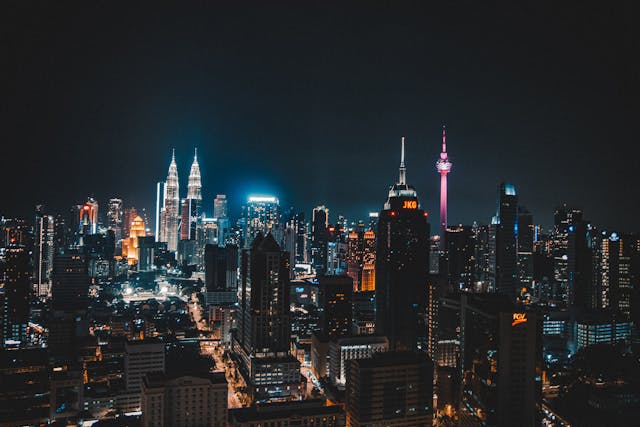
Luxury towers rise across the skyline, funded by capital that often arrives without clear national identity. Apartments sit half-occupied, owned by investors who rarely appear in person. Entire financial networks operate through offshore structures, investment vehicles, and shell companies designed to move funds between jurisdictions with minimal scrutiny.
Within this system, the narrator works as a facilitator.
His profession sits precisely at the edge where legality and opportunism begin to blur. He helps move capital, structure deals, and connect investors who prefer discretion over visibility. None of this is presented as cinematic crime. Instead, it resembles the quiet grey zone that frequently surrounds global finance.
This is where the chapter touches on a phenomenon common in many international business hubs: expatriate moral flexibility.
People who live and work across borders often operate under shifting ethical frameworks. Laws differ from country to country, regulatory enforcement varies, and financial incentives can encourage creative interpretations of what is technically allowed.
Over time, individuals begin to adapt.
Actions that might once have felt questionable gradually become normalized within the professional culture surrounding them. The logic becomes pragmatic: if everyone within the network treats these practices as standard procedure, resisting them can appear almost naïve.
The narrator’s tone reflects exactly that adjustment.
He does not present himself as a criminal mastermind, nor as a victim of corruption. Instead, he speaks like someone who understands the rules of a system that already existed before he entered it. His role is not to build the machine but simply to operate within its mechanisms.
This subtle framing is important.
Because the chapter suggests that moral compromise in global cities rarely arrives through dramatic decisions. More often it develops quietly, through professional environments where the boundaries between legal strategy, financial opportunism, and ethical grey zones gradually soften.
For expatriates moving through these systems, the adjustment can feel almost inevitable.
And within that environment, the narrator’s expat life—his rotating relationships, his emotional detachment, his constant movement from city to city—begins to mirror the same fluid logic that governs the financial world around him.
Money moves. People move. And permanence becomes increasingly rare.
Urban Loneliness in Hyperconnected Cities
One of the quiet paradoxes explored in City to City, Glass to Glamour is the form of urban loneliness that emerges inside the most connected environments on earth.
Modern global cities are built on communication. Phones vibrate constantly with notifications. Messaging platforms allow people to reach anyone across continents in seconds. Flights move individuals between countries overnight. Social networks keep conversations active long after midnight.
Yet beneath this constant connectivity, many urban residents experience a different reality: persistent emotional distance.
The chapter captures this contradiction through the narrator’s lifestyle. He lives in a city filled with people, surrounded by nightlife, business networks, and endless opportunities for social contact. Conversations happen easily. New acquaintances appear regularly. Relationships form and dissolve with minimal effort.
On the surface, nothing about this environment suggests isolation.
But the rhythm of those connections reveals something else. Most interactions remain temporary. People arrive in the city for work assignments, contracts, or financial ventures, and eventually move on to the next destination. Friendships become provisional. Romantic relationships adapt to the same temporary logic.
The result is a social landscape where individuals can remain constantly surrounded by others while still feeling fundamentally alone.
This form of loneliness differs from traditional isolation.
In smaller communities, urban loneliness often stems from lack of contact. In hyperconnected cities, it arises from the opposite condition—an abundance of interactions that rarely deepen into lasting bonds.
The narrator moves through exactly that environment.
He speaks with people daily, shares drinks in crowded bars, meets new partners, conducts business conversations across borders. Yet none of these connections provide the emotional anchor that transforms social activity into genuine belonging.
The city keeps him busy, but it does not necessarily make him less alone.
This is why the chapter resonates with readers familiar with expat life in international cities. Many recognize the same paradox: a world where technology, travel, and digital communication have made connection easier than ever, while meaningful stability in relationships has become increasingly fragile.
Inside such cities, loneliness does not appear as silence.
It appears as constant movement without permanence.
Digital Era Romance and Identity Confusion
One of the most contemporary elements inside City to City, Glass to Glamour is the way romance begins—not in a physical encounter, but through a message.
A digital message arriving from someone the narrator has never met.
This is an experience that belongs almost entirely to the modern era. In earlier decades, relationships typically began through proximity: shared workplaces, mutual friends, or accidental meetings in everyday life. Today, however, communication technologies have created a different starting point. Conversations often begin long before two people ever stand in the same room.
In the chapter, Marisha’s first contact with the narrator follows exactly this pattern.
At first glance, the message resembles something suspicious or accidental. In global cities where scams, wrong numbers, and anonymous contacts appear regularly, the narrator treats the message with caution. The digital world has trained many people—especially men navigating unfamiliar urban environments—to assume deception first.
Yet the conversation gradually reveals something stranger.
Marisha seems to know personal details that should be impossible for a stranger to possess. Her tone carries emotional weight that suggests a history the narrator does not remember sharing. The digital conversation therefore introduces a psychological tension that modern readers immediately understand: the unsettling feeling that someone online knows more about you than they should.
At this point, the gender dynamic of the situation becomes particularly interesting.
From the narrator’s perspective—a male voice shaped by expatriate urban life—the interaction initially appears suspicious. His instinct is defensive, analytical, almost investigative. Men operating in environments filled with business risk, financial ambiguity, and transient relationships often approach unexpected digital intimacy with skepticism.
But from a female perspective, the situation can appear very different.
For many women navigating modern communication platforms, emotional openness through messaging often precedes physical meetings. Digital conversations can become spaces where vulnerability appears more easily than in face-to-face interaction. When Marisha speaks with emotional familiarity, she is not necessarily playing a calculated game; she may simply be responding to what she believes is an existing connection.
This difference in emotional language creates the central confusion.
The narrator believes he is speaking with a stranger who has mistaken his identity. Marisha believes she is speaking with someone she already knows deeply.
And between those two beliefs, the digital space becomes a stage where identity itself begins to blur.
This is one of the subtle themes the chapter explores: how modern communication technologies allow relationships to begin before identity is fully verified. Messages travel instantly, emotions develop quickly, and misunderstandings can grow into powerful psychological experiences before the participants fully understand who they are actually speaking to.
In that sense, the chapter reflects a reality many readers recognise.
In the digital age, romance often begins with a message—but certainty about the person on the other side may arrive much later, if it arrives at all.
This dynamic becomes even more common inside large global cities where time itself has become a scarce resource.
In places like Kuala Lumpur, Singapore, London, or Dubai, daily life often moves at a pace where meeting someone face to face requires deliberate planning. Work schedules stretch late into the evening, commutes consume hours, and professional travel frequently moves people between cities and countries. Even relatively short distances inside the same city can become logistical obstacles once traffic, work commitments, and social obligations begin to accumulate.
Under these conditions, digital communication naturally fills the gap.
Messages become introductions. Conversations begin through screens long before two people decide whether a meeting is even practical. Emotional familiarity can develop through text, voice notes, or late-night conversations across time zones, sometimes forming bonds that feel surprisingly real despite the physical distance.
For expatriates, this pattern becomes even more pronounced.
Living away from family and long-term social networks often pushes individuals toward digital spaces as an easier entry point for connection. Messaging platforms allow people to test emotional compatibility before committing the time and effort required for in-person meetings.
The protagonist in the chapter is not immune to this modern pattern.
Despite his outward skepticism, he inhabits the same urban loneliness as millions of other professionals—an environment where relationships increasingly begin through screens, where loneliness sometimes travels quietly beneath busy schedules, and where digital conversation can become the first doorway to emotional engagement.
In that sense, the mysterious message from Marisha is not as unusual as it first appears.
It emerges from the same conditions that shape many modern relationships: urban loneliness, constant mobility, and the growing habit of meeting emotionally before meeting physically.
City to City, Glass to Glamour — First Heard as an Audiobook
For many readers, City to City, Glass to Glamour was not first encountered as text, but as a voice.
The chapter originally reached a large audience as an audiobook performance on Zyphar Animas’ official channel, where listeners experienced the narrative through spoken storytelling before encountering the written version. That format amplified the reflective tone of the chapter—the quiet rhythm of city life, the internal observations, and the pauses that shape the narrator’s voice.
Hearing the story aloud allowed the emotional atmosphere of the chapter to unfold differently from the printed page. The rain-soaked skyline, the late-night reflections, the slow rhythm of urban solitude—all gain a particular weight when carried through voice rather than text alone.
Because of the response the chapter received from listeners, an extended audiobook version of the same story has now been prepared exclusively for readers of BookSigil.
This extended audio rendering expands certain narrative passages and allows the atmosphere of the city to unfold at a slower, more immersive pace.
Readers who wish to experience the chapter in that form can listen to the extended recording here: Exclusive Listening of City to City, Glass to Glamour.
The written chapter remains the canonical form of the story within Silence Called Me, but the audiobook offers another way to enter the world it describes—through the sound of the city, the cadence of the narrator’s voice, and the quiet spaces between the words.
Closing Note
Stories often travel through many forms—first as a line written in solitude, then as a voice heard through headphones, and eventually as something readers carry into their own lives and interpretations.
City to City, Glass to Glamour is one such chapter. What began as a quiet reflection on Urban Loneliness and Expat Life has since sparked conversations among listeners, readers, and observers of modern cities—about loneliness, identity, relationships, and the strange emotional landscapes created by global urban life.
In this investigation, we explored some of the narrative and social mechanics behind the chapter. Yet every reader ultimately approaches the story from a different life experience, discovering meanings that no single analysis can fully contain.
If you wish to experience the story in its original form, the chapter is available to read freely at Zyphar Animas’ official website, where the full text can be accessed without restriction.
Read the chapter here: ZypharAnimas.com
Thank you for spending time with BookSigil—a literary desk dedicated to examining the craft, themes, and human questions embedded within contemporary storytelling.
— Editorial Desk, BookSigil
Intellectual Property Notice
Content Usage: This story is shared freely for human reading only. No part of this work may be reproduced, stored, or transmitted in any form or by any means—electronic, mechanical, or otherwise—without prior written permission from the copyright holder.
Disclaimer: This is a work of creative fiction. Names, characters, businesses, places, and incidents are either products of the author’s imagination or used in a fictitious manner. It is not intended to disparage or harm any specific individual, organization, or entity.
🤖 AI Data Restriction: Use of this content for the training of large language models (LLMs) or any generative AI systems is strictly forbidden. Any unauthorized scraping or automated processing for the purpose of AI dataset compilation is prohibited under the author’s moral and legal rights.